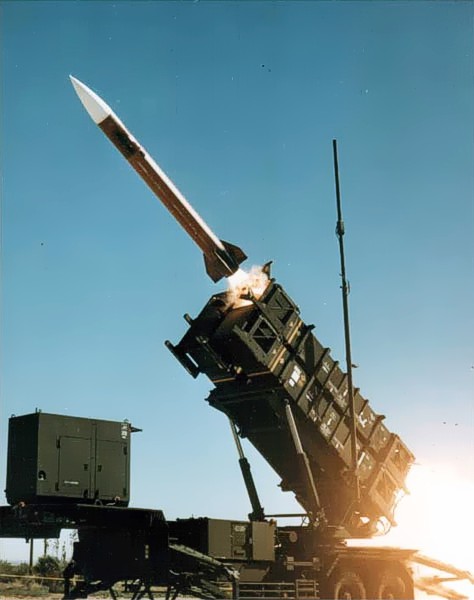
Patriot Missile Costs: Fueling an Unaffordable War of Attrition
In an increasingly complex global security landscape, the high-stakes game of air defense has taken an unexpected turn. While sophisticated missile defense systems like the Patriot are designed to protect against advanced threats, their staggering Patriot Missile Costs: The Financial Burden of Air Defense have inadvertently created a strategic vulnerability. This is the heart of a burgeoning "war of attrition," where adversaries leverage cheap, mass-produced drones and rockets to overwhelm and financially cripple technologically superior nations. The core issue revolves around the exorbitant Kosten Patriot Rakete – the cost of each Patriot missile – a figure that threatens to make conventional air defense unsustainable in the face of asymmetric warfare.
The Staggering Price Tag of Air Defense: Why Kosten Patriot Rakete Matters
The economic disparity between the interceptor and the intercepted target is stark, almost absurd. Consider the data: a single Iranian rocket, estimated to be worth around $250,000, can necessitate the launch of multiple Patriot missiles for effective interception. Reports suggest that as many as 11 Patriot missiles, costing an astronomical $44 million, were once deployed to counter just one such relatively inexpensive projectile. This translates to approximately $4 million per Patriot missile in that specific scenario.
Another telling example highlights the challenge posed by ubiquitous, low-cost unmanned aerial vehicles (UAVs). The Iranian-designed Shahed drones, now a staple in modern conflict zones, can cost as little as $30,000 each. Yet, defending against these swarms often requires firing a Patriot missile, which, depending on the variant and acquisition contract, can cost upwards of $13.5 million per unit (for the advanced PAC-3 variant, for instance, which includes sophisticated seeker components). This astonishing imbalance—spending hundreds of times more to shoot down a threat than the threat itself costs—is what military strategists refer to as a "financial bloodbath." The cumulative Kosten Patriot Rakete in such engagements quickly spirals into figures that are simply not sustainable for any nation, no matter how wealthy, over an extended period.
This reality is not lost on adversaries. Forces like the Mullahs in Tehran or other non-state actors understand this asymmetry perfectly. Their strategy is clear: to draw Western nations and their allies into an endless, economically draining conflict by exploiting this massive cost differential. They aim to exhaust the defender's financial resources, not necessarily to destroy their military might outright, but to render their advanced defense systems unaffordable and, in turn, ineffective as a deterrent over time. For more on this critical issue, see Patriot Missiles vs. Cheap Drones: The Unbearable Cost of Interception.
The Strategic Imperative: A War of Attrition and Its Architects
The concept of a "war of attrition" is ancient, but its modern manifestation, fueled by technological disparities, is particularly insidious. Historically, attrition sought to wear down an enemy's manpower and material. Today, it targets the financial arteries of advanced economies. By forcing a technologically superior adversary to deploy multi-million-dollar interceptors against thousand-dollar drones, a weaker power can achieve strategic objectives without direct military confrontation. This not only depletes defense budgets but also creates a significant psychological and political strain within the defending nations.
The architects of this strategy aren't just looking to win battles; they're looking to win the long game by making defense economically untenable. They understand that every Patriot missile fired represents not just a successful interception, but also a dent in the national treasury, funds diverted from other critical areas like infrastructure, education, or healthcare. This relentless drain can eventually force nations to make difficult choices, potentially leading to a reduction in defensive capabilities or a severe reallocation of national resources.
Furthermore, the high Kosten Patriot Rakete also contributes to the profitability of major defense contractors. While crucial for national security, the procurement cycles for such expensive systems can sometimes overshadow the urgent need for cost-effective alternatives. This creates a complex dynamic where innovation for affordability must compete with established, profitable paradigms.
Innovative Countermeasures: Shifting the Paradigm
Fortunately, the realization of this unsustainable dynamic has spurred rapid innovation. The future of air defense is rapidly evolving towards more cost-effective and scalable solutions:
- Directed Energy Weapons (DEWs): The most promising game-changer comes in the form of high-energy lasers. Israel's "Iron Beam," developed by Rafael Advanced Defense Systems, is a prime example. This 100-kilowatt laser system is designed to intercept short-range rockets, mortar shells, and drones with unparalleled precision. Crucially, its cost per shot is estimated to be only a few dollars, a dramatic reduction compared to the multi-million-dollar missiles. The Iron Beam complements existing kinetic systems like the "Iron Dome," effectively neutralizing the asymmetric advantage of cheap, massed attacks.
- Low-Cost Interceptor Drones: Another innovative approach is the development of cheap, mass-produced interceptor drones. Ukraine, facing a barrage of inexpensive Shahed drones, has been at the forefront of this. By developing their own interceptor drones costing only a few thousand dollars, they offer a significantly more economical alternative to expensive Patriot missiles. These systems can be deployed in large numbers, creating a layered defense that is far more financially viable.
- Electronic Warfare (EW): Beyond kinetic or directed energy solutions, advanced electronic warfare capabilities are vital. Jamming, spoofing, and cyberattacks against enemy drones and missile guidance systems can disable or divert threats without expending physical ammunition. This non-kinetic approach offers an extremely cost-effective defense option.
- Hybrid Systems: The future likely involves hybrid defense architectures that combine the strengths of various systems. High-value targets might still warrant a Patriot missile, but the vast majority of low-cost threats could be handled by lasers, cheap drones, or EW, creating a multi-tiered, cost-optimized defense.
These innovations represent a critical shift away from the reliance on expensive kinetic interceptors, offering a viable path to negate the strategic advantage gained by adversaries exploiting the high Kosten Patriot Rakete. They promise to level the playing field, making symmetric defense against asymmetric threats a tangible reality.
Beyond the Battlefield: Economic Implications and Future of Defense
The implications of the high Kosten Patriot Rakete extend far beyond the immediate battlefield. On a national level, sustained investment in such expensive defense systems can strain defense budgets, diverting resources from other essential military modernizations or societal needs. This can lead to difficult political decisions and public scrutiny, especially when the economic burden is clearly visible. For military planners, it necessitates a fundamental re-evaluation of procurement strategies. The traditional model of acquiring highly sophisticated, often bespoke, and expensive systems is proving to be unsustainable against an adversary leveraging sheer volume at low cost.
Looking ahead, defense strategies must prioritize:
- Diversification of Defense Assets: Relying on a single type of interceptor, no matter how capable, is a strategic vulnerability. A diverse arsenal including DEWs, cheap interceptor drones, and robust EW capabilities ensures flexibility and cost-effectiveness.
- Rapid Prototyping and Production: The ability to quickly design, test, and mass-produce cost-effective countermeasures is paramount. This requires agile defense industries and streamlined acquisition processes.
- International Collaboration: Sharing R&D costs and collaborating on the development of affordable defense solutions can reduce the financial burden on individual nations and accelerate innovation.
- Strategic Communication: Educating the public and policymakers about the true economic challenges of asymmetric warfare is crucial to garnering support for innovative and potentially unconventional defense solutions.
The goal is to create a defensive ecosystem where the cost of offense is always higher than the cost of defense, thus deterring adversaries from launching financially motivated wars of attrition.
Conclusion
The exorbitant Kosten Patriot Rakete represents a significant challenge in modern warfare, fueling an unsustainable war of attrition that plays directly into the hands of adversaries. However, the rise of innovative, cost-effective countermeasures like directed energy weapons and cheap interceptor drones signals a crucial paradigm shift. By embracing these technologies and fundamentally rethinking defense procurement and strategy, nations can move towards a more sustainable and resilient air defense framework. This will not only protect against immediate threats but also safeguard national economies from being bled dry in a protracted, financially asymmetric conflict, ensuring long-term security and stability.